


Learn what a SpanishBusiness Course is, who it’s for, and how it can be a powerful asset for your international career.
You can order a coffee in Spanish, but could you confidently lead a business meeting?
There’s a big difference between conversational Spanish and the language of the global workplace.
For career-focused international students, moving beyond general fluency and mastering professional communication is the key to unlocking a world of new opportunities.
This is where a specialized Spanish Business Course for professionals comes in.
This guide will explain what Spanish Business Courses are, what you could learn in a specialized course, and how those skills will be able to give you a significant advantage in your professional life.
To see how specialized training fits into your broader roadmap, explore our guide to Spanish courses in Spain.
(Last Updated: February 2026)
Main Key Takeaways
- It goes beyond conversational fluency to teach you the specific vocabulary, formal communication styles, and cultural norms used in the professional world.
- Proficiency in professional Spanish is a high-value skill that makes your resume stand out in any industry with international connections, not just in Spain.
- A good Spanish Business Course focuses on real-world tasks like writing professional emails, giving presentations, and participating in negotiations.
- A key part of professional Spanish is understanding the nuances of workplace culture in the Spanish-speaking business world, such as formal meeting etiquette.
- The best programs are offered by accredited Spanish language schools and are often taught by instructors with real-world professional experience.
Table of Contents
What is a Spanish Business Course (and How Is It Different from General Spanish Courses)?

Spanish Business Course is a specialized field of language study that focuses on developing the linguistic skills necessary to communicate effectively and appropriately in a professional, corporate environment.
While a general Spanish course teaches you how to navigate daily life, a Spanish Business Course prepares you for the workplace. The main differences are:
| Feature | General Spanish Course | Spanish Business Course |
| Vocabulary | Focuses on everyday terms for social situations, travel, and daily life. | Teaches specific business terminology for fields like finance, marketing, law, and human resources. |
| Formality | Often uses the casual “tú” form and informal language suitable for friends and family. | Masters the formal “usted” address and the appropriate professional tone for correspondence. |
| Context | Lessons cover general scenarios like ordering food, asking for directions, or chatting with neighbors. | Lessons are based on real-world business scenarios, such as meetings, presentations, and client communications. |
Professional fluency requires a foundation of natural, effortless communication. You can refine your core speaking and listening skills by following our strategies on how to learn Spanish fluently.
What Does Curriculum in a Spanish Business Course Cover?
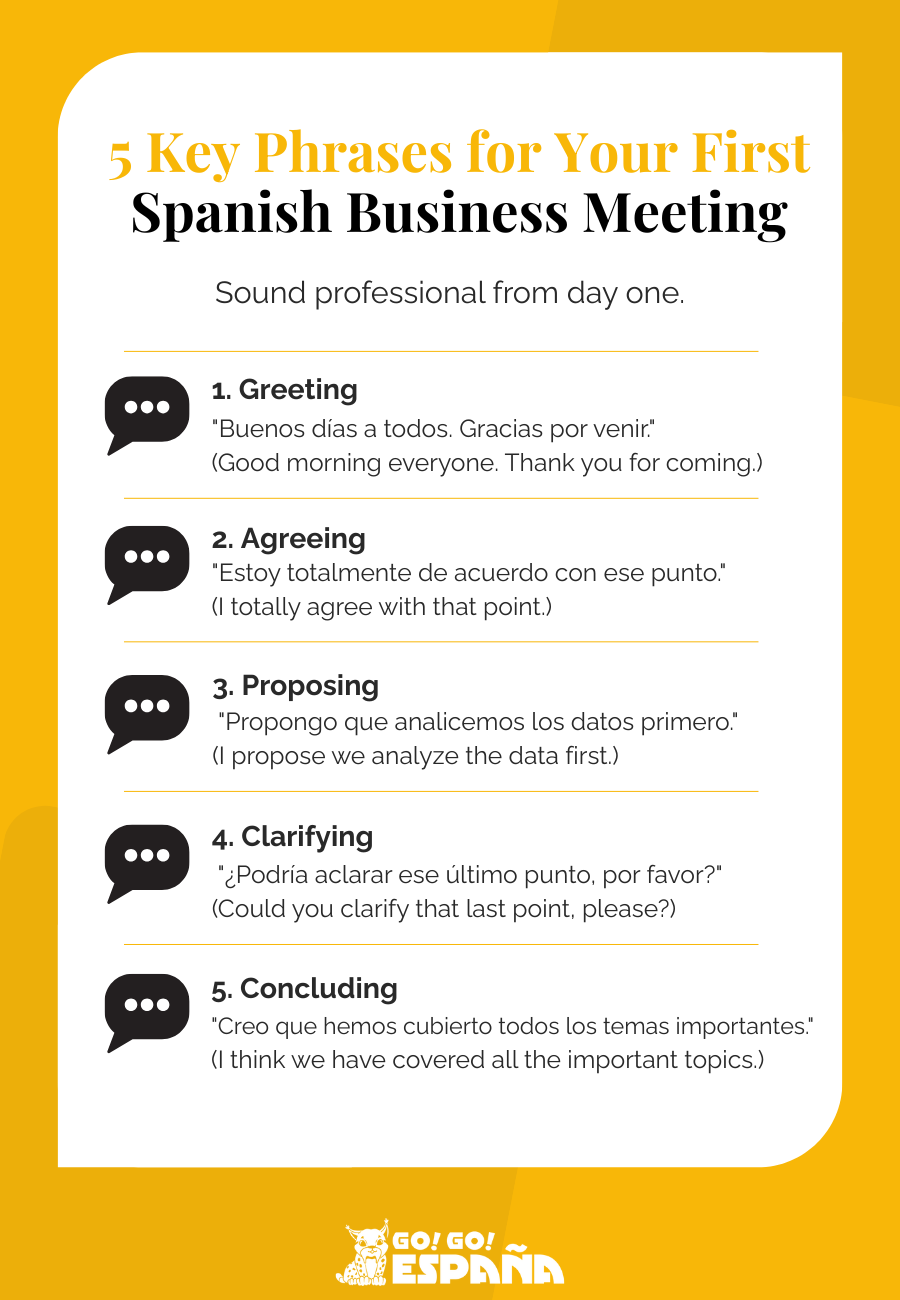
A high-quality curriculum will cover a range of practical skills, from writing professional emails to understanding the cultural etiquette of a business lunch.
While programs vary, you can expect a good Spanish Business Course to include many of the following topics:
- Professional Terminology: Specific words to use across business-related topics such as finance, marketing, international trade, and legal matters.
- Formal Written Communication: How to write professional emails, documents, reports, and proposals.
- Presentation & Negotiation Skills: The specific phrases and strategies for presenting an idea or negotiating a deal in Spanish.
- Understanding Spanish Workplace Culture: Learning about hierarchy, meeting styles, and professional etiquette in the Spanish-speaking world.
Not every institution offers a dedicated business track. To find accredited centers that specialize in professional Spanish, browse our directory of the best Spanish language schools in Spain.
Who Benefits from Learning a Spanish Business Course?
This specialization is a valuable asset for any student or professional who wants to work in an international environment and has the aspiration to expand their skillset.
Spanish Business Courses are a great fit for a variety of profiles:
- The Career Changer: Someone looking to pivot from a domestic role into a career in international business, trade, or tourism.
- The Ambitious Graduate: A recent graduate who wants to make their resume stand out and show potential employers they have valuable, real-world skills.
- The Working Professional: Someone who is currently working, but needs to improve their ability to communicate with Spanish-speaking clients, colleagues, or partners.
- The Motivated Student: Students with the long term goal of living and working in Spain in the future, looking to gain professional language skills alongside their academic studies to increase their chances of finding a job in Spain.
If you are planning to work while you study or after graduation, understanding professional etiquette is essential. Check out our guide to student jobs in Spain to see where these skills are most in demand.
What Defines a Quality Spanish Business Course?

A quality program is offered by an accredited school, taught by experienced instructors, and may even have official partnerships that add to its value.
When you are researching your options, here are a few key criteria to look for:
- Accredited School: The course should be offered by a reputable and accredited Spanish language school.
- Experienced Teachers: The best instructors often have experience in the professional world in addition to their teaching qualifications.
- Official Partnerships: Some of the top schools partner with organizations like the Madrid Chamber of Commerce to offer official business language certifications, which adds significant value to your qualification.
These principles of quality apply to all programs. You can learn more in our guide to choosing the best Spanish language school.
Top-Rated Schools for Spanish Business Courses in Spain
Go! Go! España partners with some incredible schools that offer Spanish business courses in the best destinations across Spain for international students.
Some of these trusted partner schools include:
- AIL Madrid
- Malaca Instituto
- Ole Barcelona
- Cervantes E.I
- Lacunza
- LAE Madrid
- Berceo Salamanca
- Hispania
If enrolling in a Spanish business course at one of these schools is of interest to you, reach out to our team for more information.
FAQ About Spanish Business Courses
-
What level of Spanish do I need to start a Spanish Business Course?
Most schools require at least an intermediate level (B1) of general Spanish before you can enrol in a specialized business course. You need a solid foundation to be able to handle the more complex vocabulary and concepts.
-
Is there an official certificate for ‘Business Spanish’?
Yes. Besides the general DELE and SIELE, organizations like the Madrid Chamber of Commerce offer specific exams and certificates for Spanish Business courses that are highly respected by employers.
-
Will this course help me find a job in Spain?
While it is a valuable skill, it’s important to remember that finding a job in Spain as a non-EU citizen also requires a work visa, which is a separate and complex process. This course is about building your skills for a global career.
-
Is a Spanish Business Course the same in Spain as it is in Latin America?
While the foundational vocabulary and grammar are the same, there are differences in professional etiquette, some terminology, and conversational styles. A good course will often touch on these regional differences.
-
Is a Spanish Business Course worth it if I don’t plan to work in a business field?
It can be. The skills you learn in formal communication, presentation, and writing are valuable in many fields, including academia, non-profit work, and government.
Conclusion: Ready to Invest in Your Career?
Undertaking a Spanish Business Course is a strategic investment in your professional future. It goes beyond simple fluency and equips you with the specific, high-value skills you need to succeed in the international workplace.
It is a powerful way to show employers that you are a serious, globally-minded candidate ready for any challenge.
Interested in how professional skills can boost your career?
A business-focused curriculum is a powerful way to show employers you are a globally-minded candidate. Learn more about the long-term professional advantages in our guide on how studying Spanish in Spain helps you improve your career prospects.


