


Follow these essential tips for navigating cities, avoiding common scams, and enjoying your studies with peace of mind.
When you are planning an adventure like studying in Spain, it’s natural to ask: “Is it safe?” The short answer is a resounding yes.
Spain is a very safe country with a low rate of violent crime, and it is a welcoming place for international students. However, like in any country, being aware of your surroundings and practicing a few smart habits is the key to a worry-free experience.
This guide will give you the practical, common-sense tips you need for staying safe in Spain, helping you navigate your new home with confidence. To understand how safety fits into the broader context of your move, explore our guide on what it is like to live in Spain.
(Last Updated: March 2026)

Main Key Takeaways
- Spain has consistently ranked as a safe country on the Global Peace Index, so you can rest assured it is internationally recognized for its sense of security.
- The key to staying safe in Spain is simply being aware of your surroundings, especially in crowded tourist areas and on public transport.
- A potential issue to be aware of is opportunistic theft. Simple habits like using a secure bag and never leaving your phone on a café table can prevent almost all problems.
- The universal emergency number for police, ambulance, and fire services in Spain and all of Europe is 112.
- If a situation or a person feels wrong, trust your intuition. Remove yourself from the situation and go to a public, well-lit area.
Table of Contents
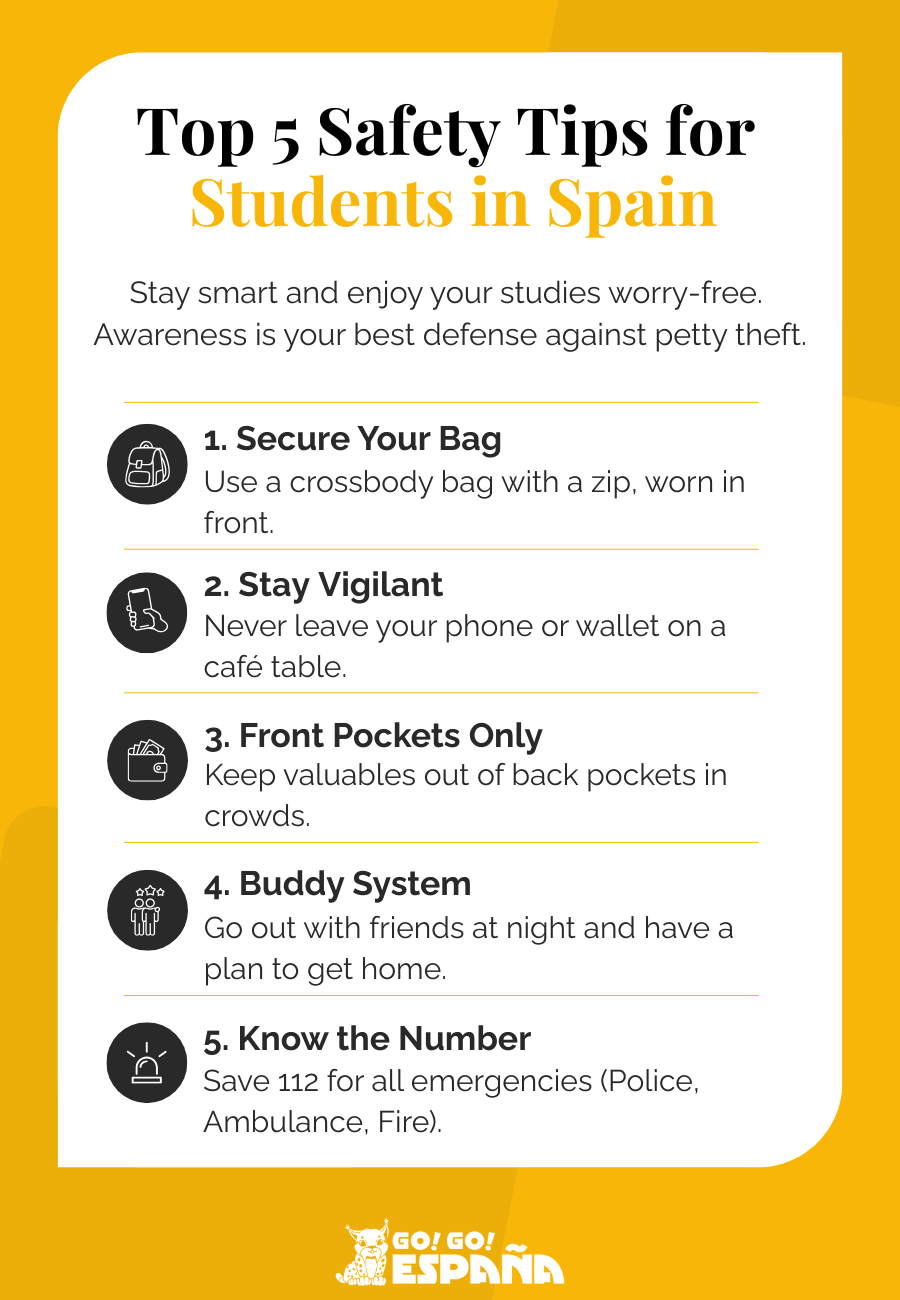
Infographic: Top 5 Safety Tips for Students in Spain
How Safe is Spain for International Students?
Spain is considered a very safe country for international students, with a high ranking on the Global Peace Index and a low rate of serious crime.
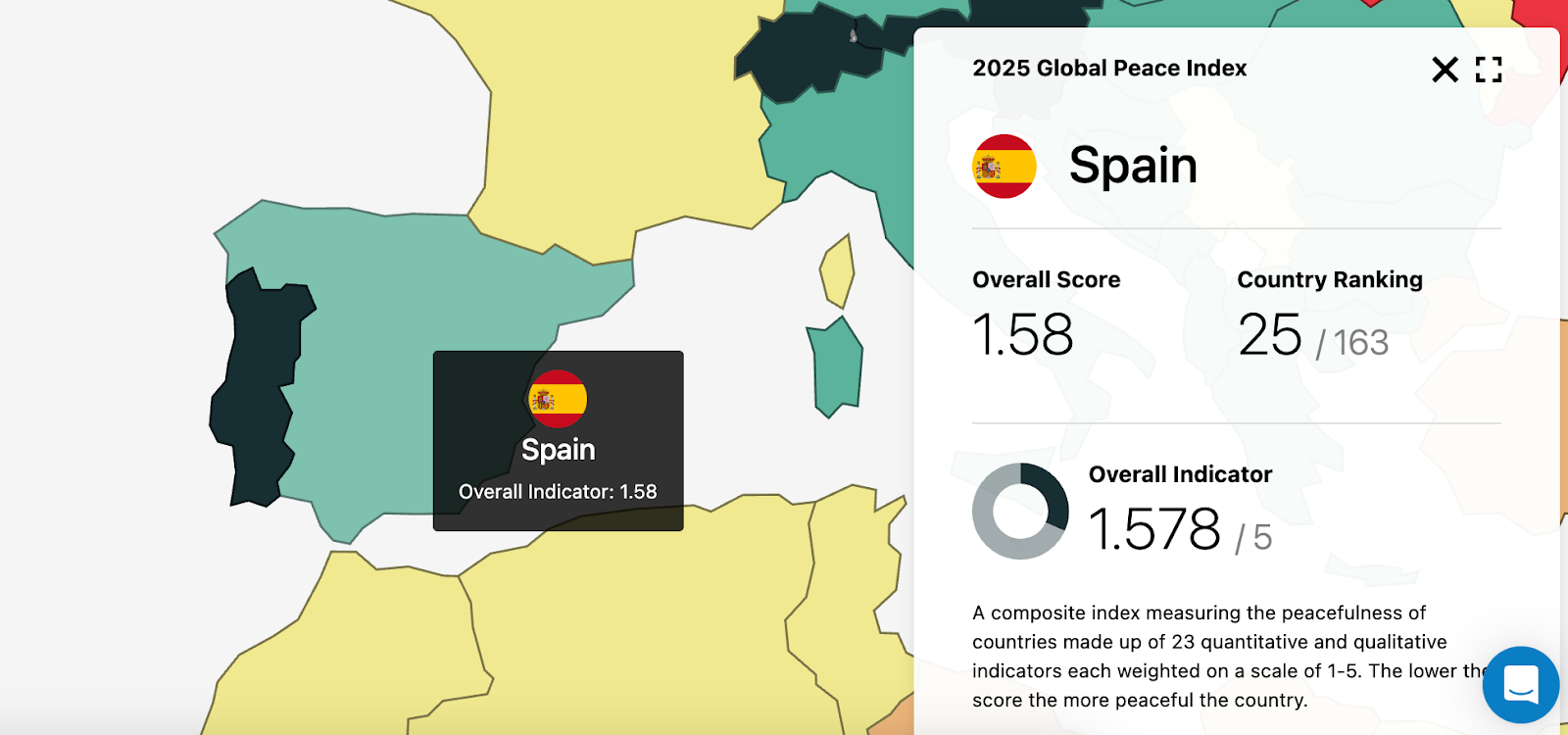
To put your mind at ease, it’s helpful to look at the facts. Spain consistently ranks high for safety and has a welcoming attitude towards its millions of visitors and foreign residents each year.
As of 2025, Spain ranks in the Top 25 safest countries globally according to the Global Peace Index, placing it well above destinations like the UK, France, and the USA.
The main risks are not related to violent crime but are centered on preventable, opportunistic petty crime, which is common in any major international destination.
What is the #1 Safety Concern for International Students?

An issue that international students can face is petty theft, specifically pickpocketing. While it is not common, it is an important thing to be vigilant of in crowded tourist areas of large cities.
Pickpockets often work in groups and use distraction tactics. One person might “accidentally” bump into you, ask for directions, or try to sell you something, while another takes your wallet or phone.
Being aware of these tactics is the best way to avoid them.
How to Prevent It:
- Use a crossbody bag that zips closed and wear it in front of you, not behind you.
- Never leave your phone, wallet, or laptop sitting at a café or restaurant table.
- Do not keep your wallet or phone in your back pocket.
- Be extra alert in crowded places like the metro, busy plazas, and tourist attractions.
Common Scams to Watch For
- The “Rosemary” Ladies: Older women offering a sprig of rosemary “for luck” (often near cathedrals). If you take it, they will demand money and may cause a scene or pickpocket you while grabbing your hand to read your fortune.
- The Clipboard Petition: People pretending to be from a charity (often claiming to be for the “deaf and mute”) asking for a signature. While you sign, an accomplice targets your pockets.
- The “Stain” Distraction: Someone “accidentally” spills something on you or points out “bird poop” on your jacket. While they helpfully try to wipe it off, they are emptying your pockets.
You can learn more about navigating specific urban environments in our student’s guides to Madrid and Barcelona.
What are Some Smart Habits for Day and Night?

Adopting a few simple, smart habits will become second nature and help you stay safe throughout your time in Spain.
- Using Public Transport: Keep your bag on your lap, not on the seat next to you or on the floor.
- Nightlife Safety: When you go out at night, always do so with friends. Don’t leave your drink unattended, and have a clear, safe plan for how you will get home. Learn more about the local social rhythm in our international student’s guide to daily life in Spain.
- Avoiding Common Scams: Be wary of people on the street asking you to sign petitions or play street games, as these are often distraction tactics for theft. A polite but firm “No, gracias” is all you need.
Important Legal Note: The “Botellón”
You may see people drinking alcohol in public squares or streets, a practice known as hacer botellón. Be warned: this is illegal in most cities. Police issue heavy fines (often ranging from €100 to €600) for drinking in public spaces. Stick to licensed terraces and bars to avoid expensive penalties.
Developing a sense of awareness in a new environment is a normal part of the adjustment process. If you find yourself feeling overwhelmed by the transition, see our student guide to culture shock in Spain for tips on navigating your first few months.
Advice for Solo and Female Students in Spain
Spain is a safe destination for solo and female travelers, and practicing standard, common-sense awareness will ensure a positive experience.
Thousands of students travel and live alone in Spain every year without any issues. The key is confidence and awareness.
- Be Aware of Your Surroundings: Pay attention to who is around you, especially at night or in unfamiliar areas.
- Share Your Plans: Let a friend or roommate know where you are going and when you expect to be back.
- Trust Your Instincts: If a situation or a person makes you feel uncomfortable, remove yourself immediately. It’s always better to be safe than sorry.
What are the Essential Numbers and Apps to Have?
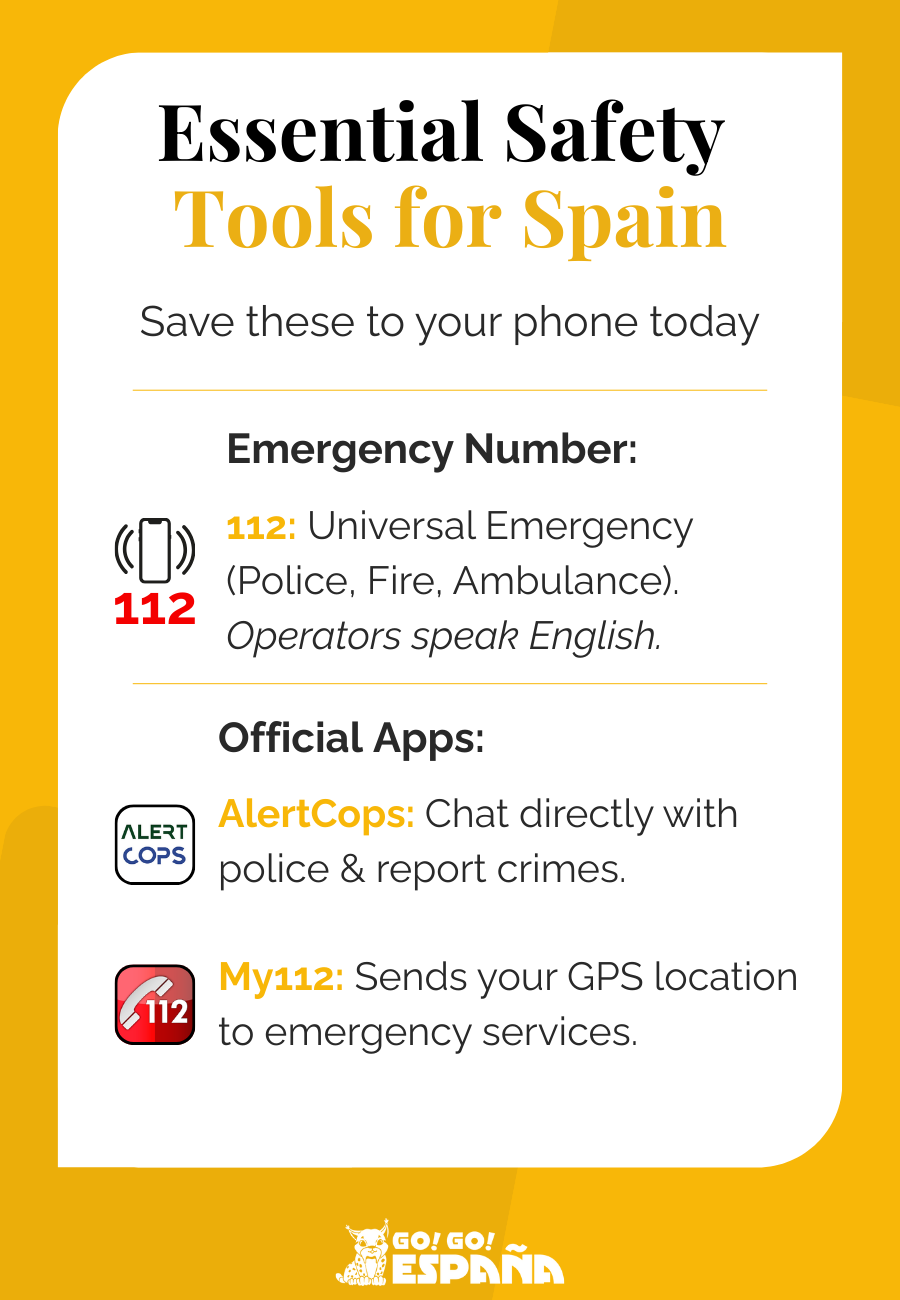
The most important number to know in Spain is 112, the universal emergency number.
- The Emergency Number: 112 will connect you to police, ambulance, and fire services. The operators can often speak English.
- Helpful Apps: The Spanish government has official safety apps like AlertCops, which allow you to chat directly with police and report incidents, and My112, which can send your exact location to emergency services.
Know Your Police:
In cities, you will see the Policía Nacional (dark blue uniforms, responsible for serious crime) and Policía Local (light blue, responsible for traffic/municipal issues).
If you travel to rural areas or highways, you will see the Guardia Civil (green uniforms). All can assist you in an emergency.
FAQ About Staying Safe in Spain
-
Do I need to carry my passport with me at all times?
Legally, you are required to carry an official photo ID. However, many students prefer to carry a photocopy of their passport and their student ID card for daily life, leaving their actual passport safely at home.
-
Is it safe to walk alone at night in Spain?
In most city centers and well-lit areas, it is generally safe. However, as in any country, it is always wisest to walk with a friend at night, stick to main streets, and be aware of your surroundings.
-
What should I do if my wallet or phone is stolen?
First, cancel your bank cards immediately. Then, go to the nearest police station (comisaría) to file a report (denuncia). This police report is necessary for any insurance claim and for getting replacement documents.
-
Are taxis safe to use at night?
Yes, official taxis in Spain are safe and regulated. You can also use popular ride-sharing apps, which are available in most major cities.
Ride-Sharing: Uber is available, but Cabify and FreeNow are often more popular and reliable in Spanish cities. Download them before you arrive.
Official Taxis: In Madrid, official taxis are white with a red diagonal stripe on the door. In Barcelona, they are black and yellow. Always look for the “Libre” (Free) green light on the roof.
-
Is it safe to live in a shared student flat (piso)?
Yes, living in a shared flat is the most common and a very safe option for students. Always make sure your building’s main door and your apartment door lock securely.
Conclusion: Staying Safe in Spain
The experience of staying safe in Spain is about being smart, not scared. Spain is a safe and welcoming country, and millions of international students have an incredible and trouble-free experience here every year.
By being aware of your surroundings and practicing these simple, common-sense habits, you can ensure your study abroad journey is a positive, happy, and safe adventure.
Knowing you’re in a safe and supportive environment makes all the difference.
Let Go! Go! España help you find a school with a great support system and an active social life. Contact us for free advice!
Ready to explore? Learn more about the different city environments in our Guides to Spain’s Top Destinations.


