

Discover how Spanish language immersion, through the everyday life of a student in Spain, can become your most powerful classroom.
Have you spent hours with language apps and textbooks, only to freeze up when trying to have a real conversation? It’s a common frustration for language learners.
The truth is, you can’t truly master a language just by studying it; you have to live it. This is the power of Spanish language immersion, and there is no better place in the world to experience it than in Spain.
This guide will explain what immersion learning is, why it is the best way to learn Spanish, and how your daily life in Spain becomes a fun and incredibly effective classroom. When you’re ready to plan your own journey, our Complete Guide to Learning Spanish in Spain has all the steps.
(Last Updated: February 2026)
Key Takeaways:
- Language immersion means surrounding yourself with a new language so completely that using it becomes a natural and necessary part of your daily life.
- By practicing in real-world situations every day, you move beyond memorization and start to actually think in Spanish, which is the key to how to learn Spanish fast.
- In Spain, every trip to a local market, every café you visit, and every new friend you make becomes a practical and effective language lesson.
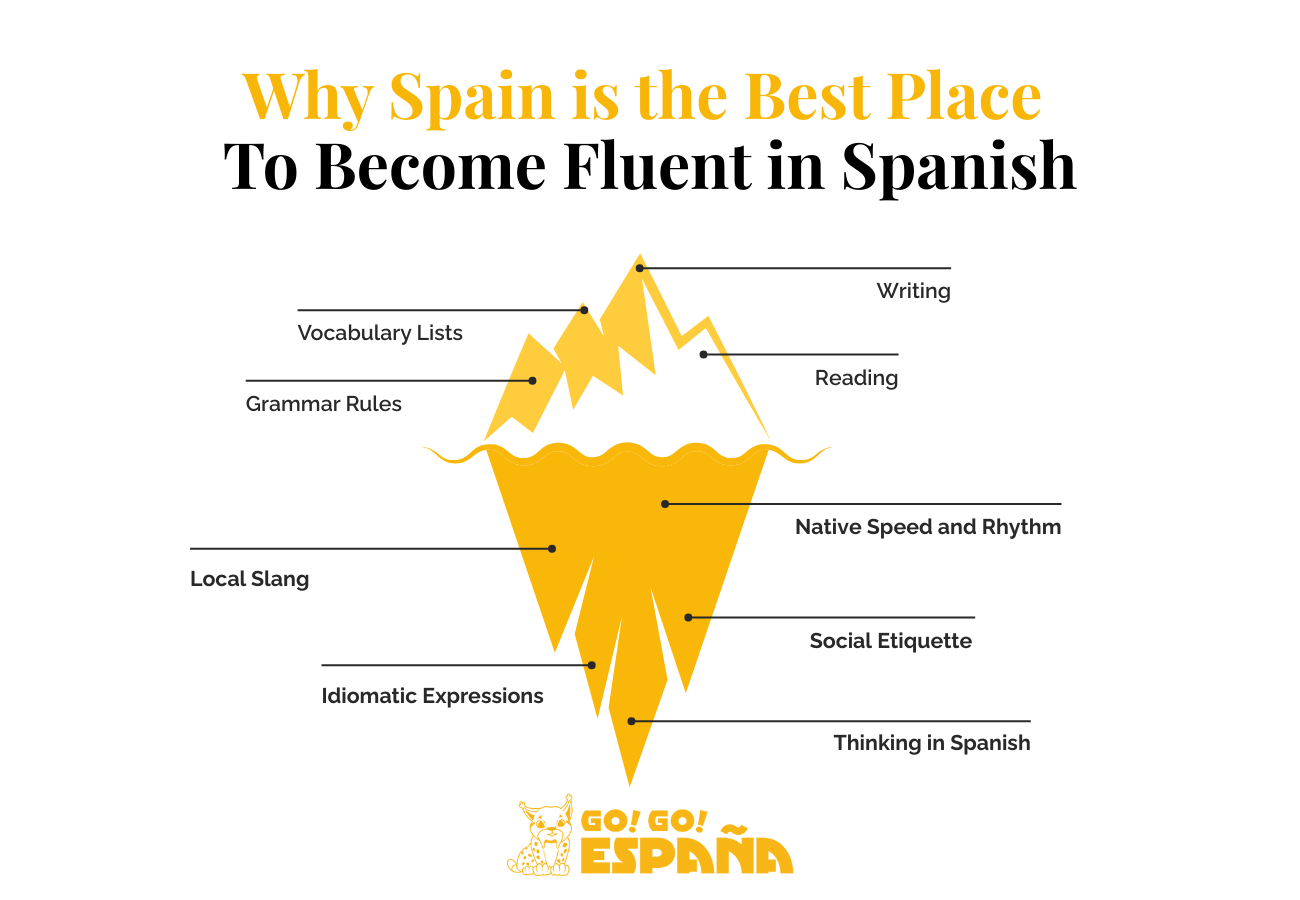
- True Spanish immersion also means immersing yourself in the culture. You’ll learn the local slang, humor, and social cues that you can never find in a textbook.
- As the origin of the language, Spain offers an authentic and resource-rich environment that is perfect for students who want to become fluent in Spanish.
What is Language Immersion and Why Does It Work So Fast?
Language immersion is a powerful learning method where you are completely surrounded by a foreign language, forcing your brain to adapt and learn out of necessity.
It is not just widely considered effective, research shows it is one of the fastest ways to gain fluency in a new language.
In a traditional classroom, you might spend a few hours a week studying grammar rules. With immersion learning in Spain, you are engaged with the language from the moment you wake up to the moment you go to sleep. This constant exposure does a few amazing things:
It Builds Confidence
You quickly realize you can survive and communicate, even with simple phrases. Every small success builds your confidence to try more complex conversations.
A study of medical residents found that just a 10-day immersion in a Spanish-speaking environment significantly improved their language competency, with further gains over six months of continued exposure (PubMed).
It Teaches You to Think in Spanish
Instead of constantly translating in your head, your brain starts to make direct connections between Spanish words and the world around you.
Longitudinal research with immigrant learners of English shows that immersion produces much stronger fluency gains than classroom only instruction, allowing learners to internalize the language naturally (Derwing et al., 2006, 2008, 2013).
It Helps You Speak More Like a Native
Constant exposure to native speakers tunes your ear to the natural rhythm, speed, and accents of the language in ways recorded audio cannot. This daily practice helps you internalize how Spanish is spoken in real-life situations.
Immersion also exposes you to the subtle nuances of the language, helping you sound more natural. Studies show that learners in immersion settings use forms like “tú” and “usted” more accurately and in more native-like ways than those studying at home, reflecting a deeper, intuitive understanding of Spanish (Cambridge University Press).
It Accelerates Learning Efficiently
Research shows that 70 hours of comprehensible input in an immersion setting can produce the same proficiency gains as 286 hours of traditional instruction, a fourfold increase in efficiency (Mason & Ae, 2023).
Dual-language immersion programs also help learners achieve advanced reading skills much earlier than conventional classroom methods (Immersion Blog).
Immersion works fast because it surrounds you with real, meaningful language use every day. It forces your brain to adapt, make connections, and internalize Spanish in a way classroom study alone cannot match.
While immersion provides the environment, a structured course provides the foundation; read our guide to Spanish courses and study techniques to see how to combine the two.
How Does Your Daily Life in Spain Become Your Classroom?
The real magic of living in Spain to learn Spanish is that everyday, routine activities are transformed into fun and practical language lessons.
Your language school will provide the essential foundation of grammar and vocabulary. Your daily life is where you will put it all into practice. Here are a few examples:
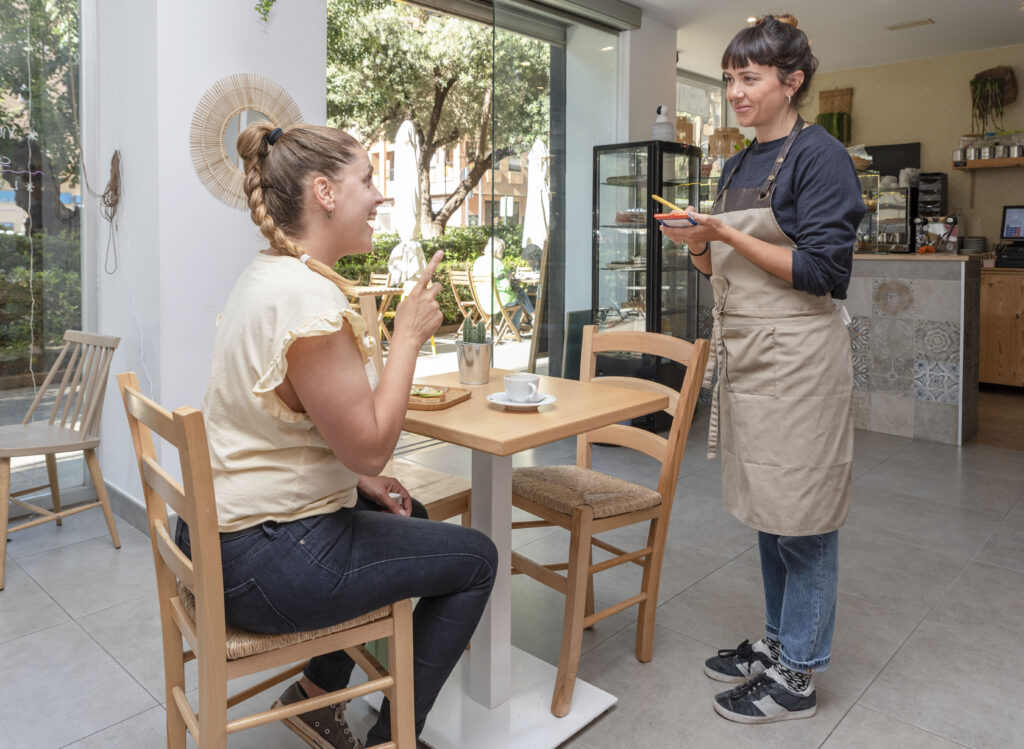
- The Morning Café: It starts simple, with “un café con leche, por favor,” but soon you’ll be understanding the barista’s questions and making small talk about the weather.
- The Supermarket: Navigating the aisles, reading labels, and asking a staff member where to find the olive oil are all fantastic vocabulary-building exercises.
- Public Transport: Listening to the stop announcements, reading the signs, and hearing the casual conversations of people around you is a free and constant listening lesson.
- Watching Spanish TV: Turning on a Spanish TV show or movie (with Spanish subtitles!) is one of the best ways to connect the words you’ve learned with visual context and natural, fast-paced dialogue.

How Does Immersion Teach You to Better Understand Spanish Culture?
True fluency is about more than just knowing the words; it’s about understanding the culture behind them. Immersion is the only way to learn this.
Why do Spaniards use certain hand gestures when they talk? What’s the local slang in Andalusia versus Madrid? How does a conversation flow during a long, relaxed meal? These are the rich, fascinating parts of the language that you can only learn by being there.
Immersion teaches you the cultural context that gives the language its true meaning and is a key part of having an authentic experience.
For a deeper look into the local culture and routines, see our student's guide to daily life in Spain.
Pro Tips for Maximizing Your Spanish Language Immersion Experience
- Live with a Host Family: If possible, choosing a homestay is the ultimate immersion accelerator. You will be speaking Spanish from breakfast to dinner.It is very common for language schools to offer homestays as an option for housing. The Go! Go! España team can also assist you in this process. Choosing a homestay is the ultimate immersion accelerator. Learn more about your options in our guide to finding student accommodation in Spain.
- Join a Language Exchange (Intercambio): This is a social event where you can meet locals who want to practice your language in exchange for helping you with their Spanish. It’s a fun, low-pressure way to not only practice, but also make new friends. Your language school will make sure you know when and where intercambios are happening.
- Don’t Be Afraid to Make Mistakes: Every error is a learning opportunity. Spanish people are incredibly friendly and will appreciate your effort to speak their language.
- Limit Time in the “English Bubble”: It’s easy to fall into the habit of only speaking English with other international students. To keep your progress on track, make a rule with your friends to speak only Spanish for a few hours each day.
Students often wonder whether any of their Spanish courses will be taught in English. Since language schools in Spain attract students from around the world, classes are taught exclusively in Spanish because it becomes the common language among everyone.
While this may feel challenging at first, it’s one of the best ways to break out of your “English bubble” and accelerate your learning.
Find more tips in our guide, 7 Proven Ways to Make Friends with Locals in Spain.
FAQ About Spanish Language Immersion
1. Is immersion learning difficult for a complete beginner?
It can be challenging at first, but it’s also one of the most effective ways to learn. Your brain adapts quickly, and you’ll pick up essential, practical phrases right away out of necessity.
We know starting out can feel nerve-wracking, which is why our team is here to make your transition as smooth as possible. If you’d like a head start, check out our free beginner Spanish lessons to build confidence before you arrive.
2. How long does it take to see results from immersion?
You will notice a significant improvement in your confidence and listening skills within the first few weeks. Most students attending an intensive immersion course can reach a strong conversational level in 4 to 6 months.
To understand your current level and see how much progress you could make through Spanish immersion, take our free Spanish level test here.
3. Will I pick up a specific accent from the region I study in?
Yes, you likely will, and that’s a wonderful part of the experience! Your accent will tell the story of where you truly learned the language.
Whether you develop the lisp of Madrid or the musical cadence of Andalusia, you can rest assured that you will be understood by Spanish speakers across the world.
4. Can I get the benefits of immersion if I live with other international students?
Absolutely. You will still be immersed every time you step outside your door. The key is to be disciplined and make an effort to speak Spanish with your roommates and to actively seek out conversations with native speakers.
5. What if I’m shy? Is immersion still for me?
Yes! Immersion can be especially helpful for shy people. Daily, necessary interactions, like buying groceries, provide low-stakes, structured practice that helps build confidence for more open conversations later.
Language schools also offer a variety of activities designed to engage all types of personalities, making it easier to participate at your own comfort level.
Conclusion: Ready for Your Spanish Immersion Adventure?
The journey to fluency is an exciting one, and immersing yourself in Spain is the fastest and most rewarding path to get there. It’s an experience that will not only teach you a language but also give you a new perspective on the world.
Ready to immerse yourself? Explore our partner language schools in Spain, all focused on getting you fluent through real-world experience.


