Find everything you need to know from a student’s perspective on how to adjust to daily life in Spain, and embrace its unique cultural rhythm and lifestyle.
Wondering how you’ll fit in study time, classes, and making friends when it seems like dinner doesn’t start until 10pm? You’re not alone.
The rhythm of daily life in Spain is exciting, but for a new student, it can take some getting used to. Learn how to master the Spanish schedule so you can feel at home and thrive on your study abroad journey.
Adapting to the local rhythm is the secret to a successful study abroad experience. This guide is a key component of our complete guide to learning Spanish in Spain, providing the lifestyle context you need to thrive.
We’ll explain the local routines, from meal times to socializing, and give you tips on how to structure your own student schedule to fit in.
(Last Updated: February 2026)
Main Key Takeaways
- The Spanish daily schedule operates later than in many other cultures, with the main meal of the day, lunch (la comida), often starting between 2–3pm.
- The “siesta” is not necessarily a nap. For students, this long midday break is the perfect time for a leisurely lunch, studying, or socializing with classmates.
- Social life is a central part of daily life in Spain, with evenings often dedicated to a leisurely walk (paseo) and enjoying tapas with friends before a late dinner.
- Meals are important social events. The tradition of sobremesa, lingering at the table for conversation long after the food is finished, is a cherished part of the culture.
- Adapting to this different pace of life is the best way to immerse yourself in the culture and have an authentic experience.
Table of Contents
What is Daily Life in Spain for International Students Really Like?
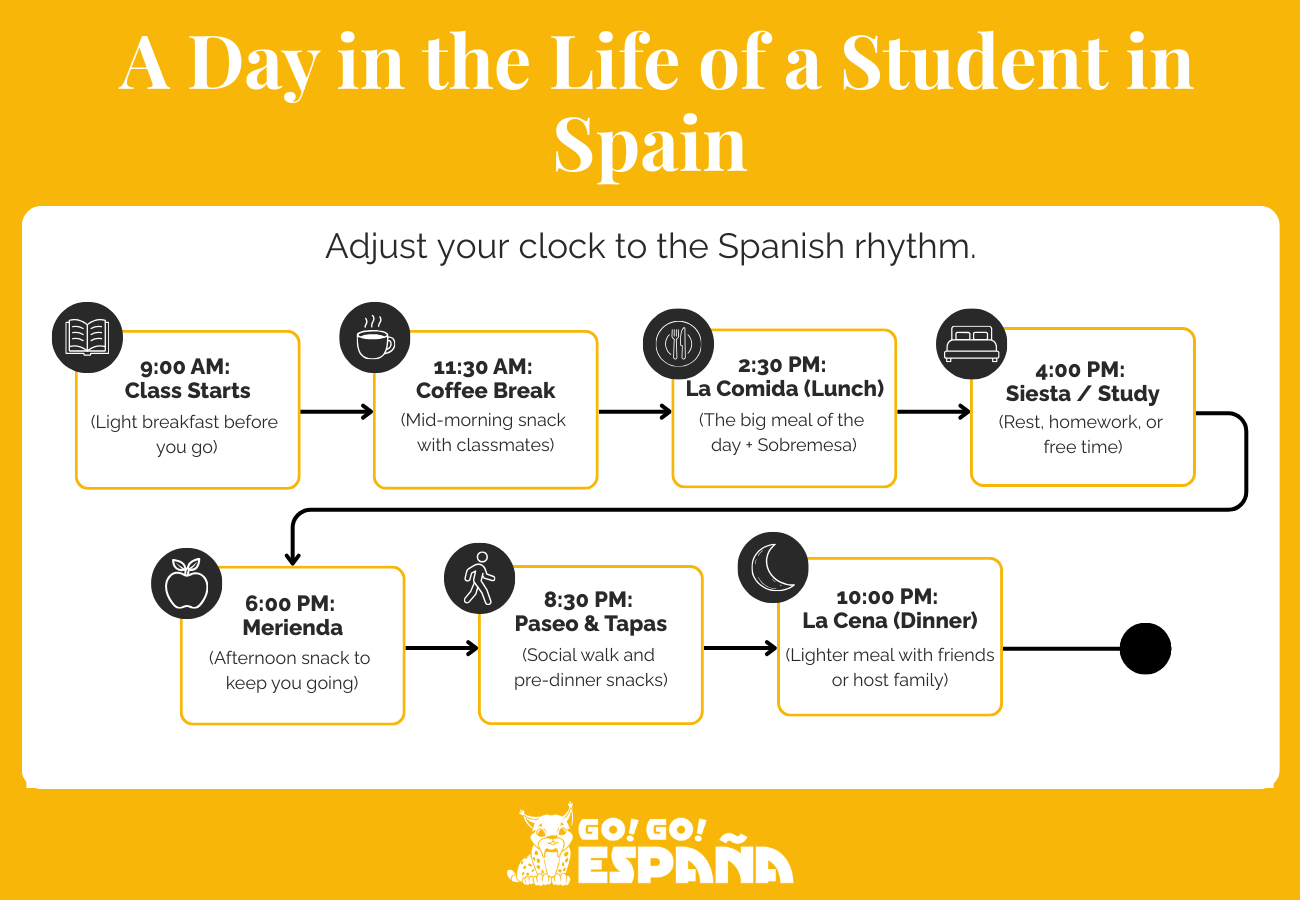
The Spanish daily schedule follows a unique rhythm that revolves around a late, long lunch and prioritizes social time in the evenings.
For a new international student, the local schedule can take some getting used to, but it offers a fantastic balance of study and social life once you adapt.
- Morning (La Mañana): The day often starts with a light breakfast, like a coffee and a croissant or toast, before heading to your 9am class, whether at a Spanish language school or a Spanish university.
- Midday (Mediodía): Here’s where you’ll notice the biggest cultural difference. The main meal of the day, la comida (lunch), happens late,usually between 2–4pm . This long break is perfect for students. It’s a great time to have a proper meal with a host family, meet classmates for a cheap menú del día, or get homework done before evening activities.
- Evening & Night (La Tarde/Noche): The early evening is often a time for a leisurely walk (paseo) or for studying. Later, the social life begins as people gather for tapas before dinner, which is a lighter meal and often doesn’t start until 9pm or even later.
What is Food Culture Like?

In Spain, meals are important social events that are meant to be enjoyed slowly and in the company of others.
Food culture is about much more than just what you eat; it’s about how you eat and being present in the moment with your loved ones.
- Tapas: The culture of going for tapas is a central part of the student life in Spain. It’s about hopping from bar to bar, sharing small plates of food, and socializing with friends.
- Sobremesa: This is a cherished Spanish tradition with no direct translation. It’s the art of lingering at the table for conversation, coffee, or drinks long after the meal is finished. For a student, this is a perfect, relaxed opportunity to practice your Spanish.
How Can You Balance Your Studies with a Social Life?

The Spanish schedule, with its long midday break and late evenings, provides a great structure for balancing academic responsibilities and a vibrant social life.
The key is to adapt your own routine. Use the long lunch break for your main meal and catching up on some study.
This frees up your evenings to participate in the local social culture without feeling guilty about your coursework.
Joining a language exchange (intercambio) is a perfect example of a fun activity that is both social and a great way to practice your Spanish.
What are the Basics of Spanish Social Etiquette?
Understanding a few key social customs, like greetings and the concept of time, will help you feel more comfortable and integrate more easily.
Spanish social life has its own unwritten rules.
For example, the dos besos (two kisses on the cheek) is a standard greeting between friends, and being 15 minutes late for a social plan is often considered perfectly normal.
If you want to master the social rules, you can read our fun guide to Spanish etiquette for students.

FAQ About Student’s Daily Life in Spain
-
Do all shops close for a siesta?
In major cities, large chains and department stores usually stay open all day. However, it is still very common for smaller, family-owned shops to close for a long break from roughly 2–5pm.
-
How do students manage to eat dinner so late?
Many students will have a late afternoon snack, called a merienda, around 6pm to tide them over until a late dinner.
-
What’s the best way to adapt to the new schedule?
While challenging, the best thing you can do is immerse yourself in the Spanish culture and put yourself out of your comfort zone. Most students quickly come to love the more relaxed pace of life and the emphasis on socializing in the evenings.
-
What is a menú del día?
This is a fixed-price lunch menu offered by most restaurants on weekdays. It’s a fantastic deal for students, typically offering a three-course meal with a drink for a very affordable price.
-
Is the nightlife really that late?
Yes. In Spain, it’s common for people to meet for dinner at 10pm , go to a bar around midnight, and then head to a club around 2–3am (and yes, this does often mean arriving home after madrugada (dawn)).
Conclusion:
Embracing the daily life in Spain is one of the most rewarding parts of your study abroad adventure. The best advice is to lean into the local rhythm rather than fighting it.
By adjusting your own schedule, you will feel more at home, have a richer social life, and get the most out of your authentic cultural immersion. This is not just a trip; it’s an opportunity to experience a new way of living, and adapting to the daily customs is a key part of that transformation. See how different regions compare in our guide on how to choose a city in Spain for your Spanish language study.
The best way to live the Spanish life is to be here!
Let Go! Go! España help you find the perfect school or university to start your cultural adventure.