Understand how to adapt to your new life and learn practical strategies to deal with culture shock, so you can thrive on your Spanish language learning journey in Spain.
Feeling a little overwhelmed, frustrated, or a bit lonely in your new Spanish home? What you’re experiencing is completely normal!
Culture shock and homesickness are universal feelings often associated with moving to live in a foreign country. Our team at Go! Go! España have found, through our extensive experience helping and supporting countless students, that these feelings are a common occurrence after arriving in Spain. Overall it is important to remember that it is temporary and that you will overcome it! It is not a sign of weakness; in fact, it’s a sign that you are truly stepping out of your comfort zone and immersing yourself in a new way of life, which is the whole point of this amazing adventure.
We’ll walk you through what culture shock is, why it happens, and share some practical advice to help you navigate these feelings. With a bit of patience and the supportive strategies described below in this article, all students can overcome this phase and go on to have the time of their lives.
Learning to adapt to these new rhythms is a huge part of truly understanding what it is like to live in Spain. Remember that you are not alone, and it does get better.
(Last Updated: February 2026)
Key Takeaways:
- Culture Shock is a Normal Process: Feeling overwhelmed or frustrated by cultural differences is a natural and temporary part of adapting to a new country.
- Change Happens in Stages: The journey of adapting to a new lifestyle typically follows four stages: the initial “Honeymoon” phase, the challenging “Frustration” phase, the “Adjustment” phase, and finally, “Acceptance.”
- Routine Creates Stability: One of the best ways to combat feelings of disorientation is to create a simple, predictable daily routine for yourself.
- Connection is the Best Cure: Building a new social network and making friends is the most powerful way to overcome feelings of loneliness and homesickness in Spain.
- Be Patient with Yourself: Adapting to a new culture takes time. Be kind to yourself, celebrate small victories, and remember that these challenges are part of a transformative growth experience.

What is Culture Shock? (And Why This Feeling Means You’re On the Right Track)
Culture shock is the feeling of disorientation a person can experience when suddenly in a new and different cultural environment. It’s a natural reaction to the loss of familiar social cues, norms, and way of life in one’s own country.
At its core, culture shock is simply the stress that comes from trying to navigate a new set of unwritten social and cultural rules. Things that were once automatic, like when to eat dinner, how to greet someone, or the pace of a conversation, are now different. This can be mentally tiring and can lead to feelings of irritation, anxiety, or isolation.
However, it’s helpful to reframe it in a positive way. Feeling culture shock is a sign that you are truly immersing yourself in your Spanish language learning journey, which is exactly what leads to the most profound personal growth and development from this experience.
What Are the 4 Common Stages of Culture Shock Experienced by International Students in Spain?
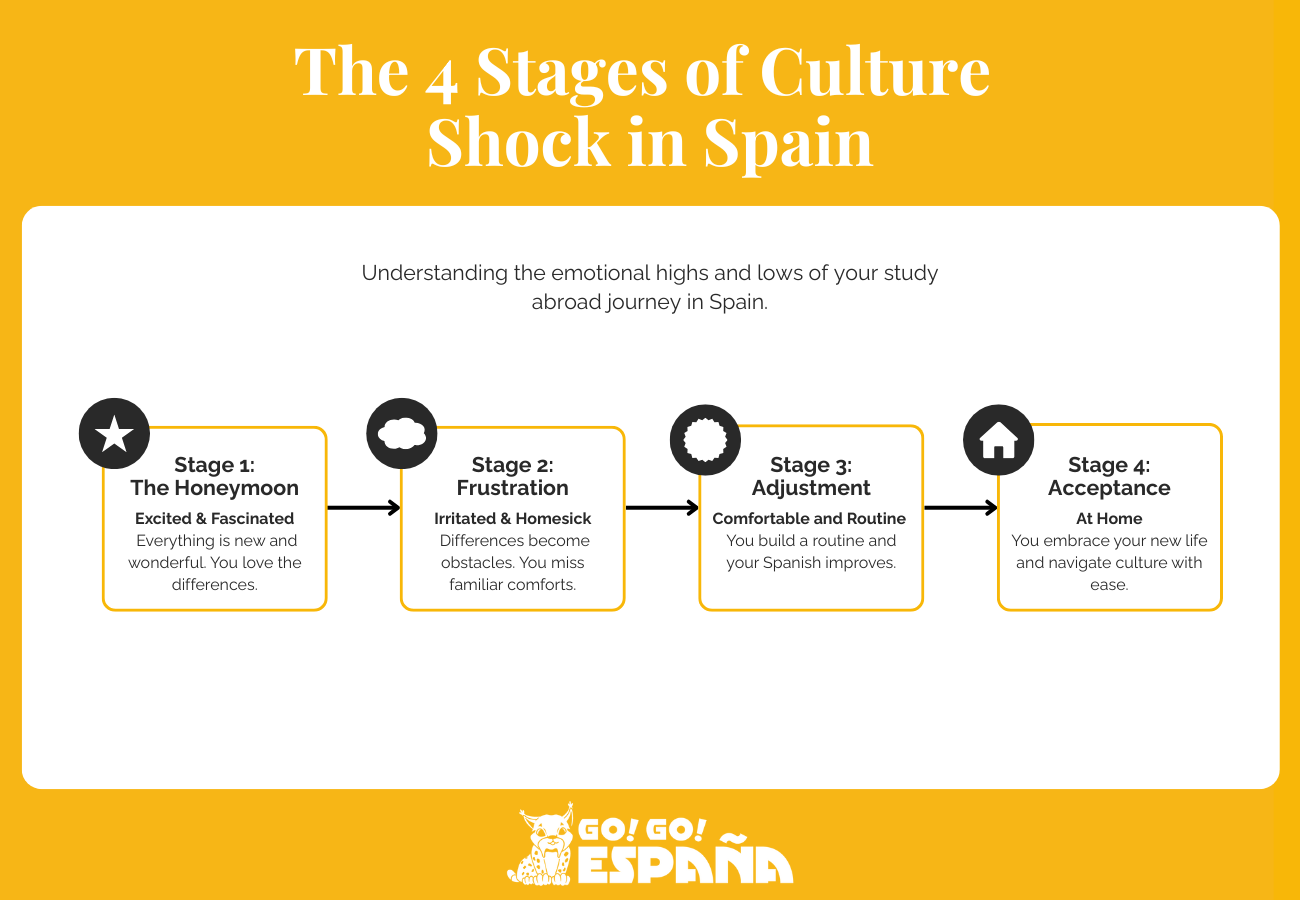
The process of adapting to a new culture typically follows four predictable stages. Understanding these stages can help you recognize where you are in your own journey.
- The Honeymoon Stage: When you first arrive, everything is new, exciting, and a buzz of wonder. You’re fascinated by the differences and are having a great time experiencing something new.
- The Frustration/Negotiation Stage: After a few weeks or months, the initial excitement can wear off. The cultural differences that were once charming now start to feel like obstacles. This is the most challenging stage, and it is where feelings of homesickness in Spain are often strongest.
- The Adjustment Stage: You begin to build routines. You feel more comfortable navigating your daily life, your language skills are improving, and you start to understand the local way of doing things.
- The Acceptance/Adaptation Stage: You now feel at home in your new environment. You can navigate the culture with ease and have embraced your new life in Spain.

What Are Some Practical Strategies for Dealing with Culture Shock?
There are several practical, proactive steps you can take to manage the feelings around culture shock and make your adjustment to life in Spain smoother.
1. Create a Routine
A predictable schedule creates a sense of stability when everything else feels new. Knowing you have class in the morning, plan to go to the gym in the afternoon, and have a set time for homework can be incredibly grounding. You can learn all about the typical Spanish schedule in our student’s guide to daily life in Spain.
2. Find Your “Third Place”
Discover a regular spot that isn’t your apartment or your school. It could be a favorite local café, a park bench with a nice view, or a library. Having a comfortable, familiar place that is “yours” can make a big difference.
3. Stay Connected, But Don’t Isolate
Schedule video calls with family and friends back home to stay connected. However, it’s crucial to balance this by also pushing yourself to go out and do one new local thing each day, even if it’s just a short walk in a new neighborhood.
4. Find Your Community
Think creatively about how you can implement different ways to meet people and make new friends. Consider trying out a new hobby, scheduling in a fun workout class like boxing or yoga, attending a language exchange event, or joining Facebook/WhatsApp groups to find people in similar situations to you. These connections will form a sense of community, building positive relationships for your new life in Spain.
How Can You Cope with Feelings of Homesickness?
Missing home is a natural and valid feeling. Acknowledging that homesickness is a part of the process, while also making your new space your own, can better equip you to manage these feelings.
It’s okay to miss your family, your friends, and even your favorite foods. The key is to not let that feeling prevent you from engaging with your new life.
- Bring a Piece of Home: Pack small, comforting items from home, whether it’s your favorite snack, photos of loved ones, a familiar blanket, or a scented candle that brings a sense of familiarity and peace.
- Personalize Your New Room: Don’t live out of your suitcase. Unpack and settle in. Decorate your new room to make it feel like your own personal space. This creates a sense of belonging in your new daily life.
- Share Your Culture: Use the time when you are feeling a little bit homesick to connect with your new international friends, who are most likely feeling the same way. Share things with them that you miss from your home; cook them your favourite dish, or watch a funny movie from your country to experience a taste of home, while also fostering a friendship through those mutual feelings associated with living in a new place.
What is the Best Way to Feel Connected?
The most powerful and effective way to overcome feelings of loneliness and culture shock is to build a strong social circle of friendships. There are two main options when it comes to creating a solid base of connections for your new network in Spain.
1. Connect with Spanish Locals
Friendships with locals can help you feel more at ease in your new life, because ultimately, Spaniards are the ones who can show you firsthand the cultural teachings and traditions of Spain, that you otherwise might not have learnt!
Not only will these connections expand your social circle, but they will also help you adjust to the differences of daily life in Spain in a natural way, instilling in you a sense of confidence and comfort. We have a full guide with practical tips here: 7 proven ways to make friends with locals in Spain.
2. Connect with International Students
Connecting with your fellow international students will prove to be an immense help and foundation for a support system. You will easily understand each other better and relate to the shared experience of learning Spanish in Spain, and you can also encourage each other to push through the struggles and keep challenging each other.
These friendships might become some of the best ones of your life. Going through this period of incredible growth and personal development together builds a lasting connection that few other experiences in life can create.
FAQ About Culture Shock and Homesickness in Spain
1. How long does culture shock last?
There is no set timeline, as it is different for everyone. The most challenging “frustration” phase can last for a few weeks to a few months, but it almost always gets better as you begin to adapt and build routines and resilience.
2. Is it normal to feel angry or overwhelmed with the new culture?
Yes, absolutely. Feeling irritated by small things, like a shop being closed when you expect it to be open, or not being able to book a table for dinner until after 8:30pm are classic symptoms of culture shock in Spain. But rest assured that it’s a normal part of the process.
3. What if I’m an introvert? Will it be harder for me?
While it might take more conscious effort, introverts can adapt just as successfully as extroverts. The key is to find like-minded people and prioritize social activities that you are comfortable with and interested in, such as joining a book club or a walking group, rather than forcing yourself into a situation you know you won’t enjoy.
4. Will improving my Spanish help with culture shock?
Yes, immensely. As your language skills improve, you will feel more confident in daily situations, be able to understand more of the culture around you, and find it easier to make friends. This directly reduces feelings of isolation. Explore our strategies on how to learn Spanish fluently to accelerate this process.
5. Should I avoid other international students and only talk to Spaniards?
No, a balance is always best. Your fellow international students are a crucial support system because they are going through the exact same experience. The key is to build friendships with them while also making a conscious effort to seek out opportunities to meet and speak with locals.
Navigating Culture Shock in Spain
Remember that these feelings are normal, they are temporary, and they are part of the process of growing into a more confident and globally-minded person.
Be patient and kind to yourself, and know that an incredible experience is waiting for you on the other side of these challenges.
Choosing a school with a strong, supportive student community can make all the difference in your adaptation.
Let Go! Go! España help you find a school that’s the perfect fit for your needs.
Contact us for free advice!