Home - Learning Spanish in Spain - What is it Like to Leave in Spain?
What is it Like to Live in Spain? A Guide for Language Students
We provide a warm, honest, and encouraging guide to help you adapt to the culture, navigate daily life, and make the most of your adventure.

You’ve made the big decision to move to Spain for your language studies. The excitement is real, but so are the questions. What will it really be like to live in Spain? How will you adapt to a new culture, make friends, and build a life in a new country?
It’s completely normal to feel a mix of excitement and nervousness. This guide is here to give you an honest look at the incredible journey ahead. We’ll share practical, real-world advice to help you not just survive, but truly thrive in your new Spanish home.
Before diving into the local lifestyle, you may want to start with our central roadmap on learning Spanish in Spain for a full overview of the journey.
(Last Updated: January 2026)
Key Takeaways
- The daily schedule revolves around a late, long lunch (around 2-3 PM) and a very late dinner (often after 9 PM). Adapting to this is a key part of fitting in.
- Spanish culture prioritizes socializing and enjoying the moment, so be prepared for a more relaxed and less rushed pace of life compared to what you might be used to.
- Feeling overwhelmed or homesick is a natural part of the adaptation process that nearly every student experiences. It’s a sign you’re growing, and it will pass.
- Building a social circle is the key to a happy experience. Actively seeking out language exchanges (intercambios) and joining hobby groups is the best way to meet people.
- Spain is safe and welcoming for international students. While petty theft can occur in big cities, simple precautions will keep you secure.
Spanish daily life and schedule
What is it Like to Live in Spain? Daily Schedule and Lifestyle
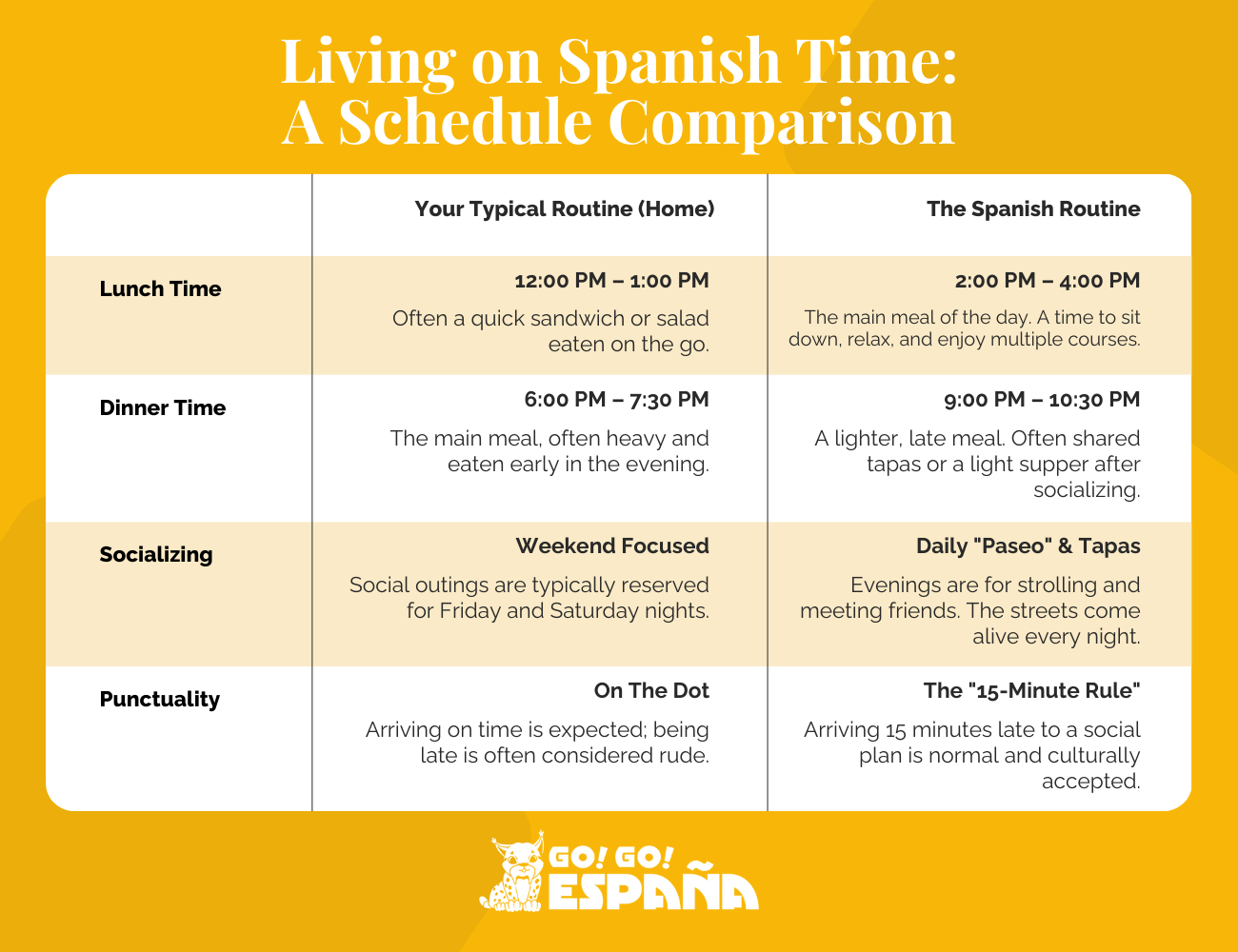
You’ve taken the leap to move to Spain, and you’re in for a treat. Life here follows a unique rhythm that places social connection and enjoyment at the center of every day.
When Do People Eat in Spain?
Getting used to life in Spain starts with understanding the local mealtimes. Meals here are later than in many other countries.
Lunch, the main meal of the day, usually begins around 2:00 to 3:00 PM. It often includes multiple courses and can easily last over an hour. Since lunch finishes later in the afternoon, families don’t sit down for dinner until 9:00 to 10:00 PM.
Don’t be shocked if you try to go out for dinner at 6:00 PM and the kitchen hasn’t even opened yet!
Prioritizing Socializing and Relaxation
Spain’s unique daily rhythm is designed to make time for both social connection and leisure. Even in the busiest cities, meal times are never rushed and are valued as important opportunities to slow down and connect with friends and family.
Evenings are particularly social, with streets filling as people take a stroll (paseo) before gathering for a late dinner. Plazas, terraces, and cafés become lively hubs where friends and families enjoy the mild climate and vibrant atmosphere.
The Role of the Siesta in Daily Life
You’ve probably heard of the siesta, a tradition where shops close for a few hours in the afternoon so people can enjoy lunch and take a short rest before finishing the workday. While it’s more common in smaller towns than in big cities today, the siesta remains an important part of Spanish culture and a reminder to slow down and make time for rest.
Embracing this new schedule and lifestyle, rather than fighting it, is the first step to feeling like a local. Before long, it will be 11:00 PM, and you’ll be asking what’s for dinner!
For a detailed look at the daily schedule and what to expect, see our student’s guide to daily life in Spain.
Navigating Spanish social etiquette
How to Navigate Spanish Social Etiquette Like a Local
Navigating a new culture can feel intimidating, but learning a few key Spanish customs will boost your confidence and help you connect with people more easily. Don’t worry about getting everything perfect! Spanish people are generally very warm and forgiving of cultural mistakes.
Common Spanish Social Norms to Know
- Dos besos: This is the classic Spanish greeting of “two kisses” on the cheek. Two women or a woman and a man will use dos besos, while two men will stick to a handshake. Save this greeting for friends, family, or new acquaintances you’re introduced to by friends. A handshake is more appropriate for complete strangers in a formal setting. Hugs are also a common greeting amongst friends and family.
- Punctuality: In Spain, it’s normal to arrive 15 minutes late for a social plan. If your friends say 9:00 PM, don’t be surprised if they stroll in closer to 9:15 PM. Think of it as a relaxed rhythm rather than being rude, it’s part of the Spanish way of life.
- Sobremesa: In Spanish, sobremesa refers to the tradition of staying at the table long after the meal is finished, sharing conversation, laughter, and sometimes coffee or a drink. It’s not about rushing off once the plates are cleared, but about enjoying the social connection that follows the food. This unhurried time can stretch for hours, especially on weekends or family gatherings, and is considered just as important as the meal itself.
Remember, it’s all part of the experience! It might feel a little strange at first, but with time, these customs will start to feel natural and you’ll find yourself enjoying this new way of life.
For a deeper dive into Spanish social rules and tips to build your confidence, check out our fun guide to Spanish etiquette for students.
Culture shock and homesickness
How Can You Overcome Culture Shock and Homesickness?
Feeling overwhelmed, frustrated, or homesick is a completely normal part of studying abroad. Every student experiences it at some point, and it doesn’t mean you’re failing the adventure. Instead, it’s a sign that you’re truly challenging yourself and growing.
There are a few strategies that can help ease culture shock and homesickness in Spain. Most importantly, be patient with yourself. Some days you may feel a little lost or lonely, and that’s okay.
Establish a routine and make an effort to connect with others, especially your classmates. They are navigating the same experience and facing similar challenges. Supporting one another can help you build friendships and make the transition smoother.
Remember, these feelings are temporary and part of the journey to truly feeling at home in your new environment.
For a deeper look at culture shock and practical strategies to handle homesickness, see our guide to beating culture shock and homesickness in Spain.
Do You Need a Schengen Visa for Spanish Language Study Under 90 Days?
For many nationalities (including the USA, Canada, and Australia), no visa is needed for short stays. For others, a Schengen Visa is required.
Social life in Spain
How Can You Build a Social Life in Spain?
Building a social life is one of the most rewarding parts of studying abroad, and it’s also the fastest way to improve your Spanish.
While it’s great to make friends with other international students in your class, connecting with locals will give you a more authentic experience. Not only will you gain a deeper understanding of Spanish culture, but it’s also the perfect chance to practice your language skills in real-life situations.
Attending a Language Exchange (Intercambio)
Language exchanges, known locally as intercambios, are one of the best ways to meet locals. Just as you want to improve your Spanish, many Spaniards are looking to practice their English.
An intercambio gives you the chance to make friends while practicing your language skills in a relaxed and social setting. These events are so common that you’ll likely hear about one without even having to look for it.
Join Local Activities and Hobbies in Spain
Another great way to connect with locals is by joining activities that match your interests. This could be playing on a recreational soccer team, taking an art class, or attending a live music show. Anything you enjoy at home, you can usually find in Spain too.
Thankfully there are so many resources to help facilitate this process. Apps like MeetUp and Playtomic that are widely used in Spain to help people connect over shared hobbies.
Remember, building a social life is more than just making friends. It’s an essential part of immersing yourself in the culture and boosting your confidence in speaking Spanish. We have a full guide with tips here: 7 proven ways to make friends with locals in Spain.
Safety in Spain
Is Spain a Safe Country for International Students?
Spain is a very safe country for international students, and with a little common-sense awareness, you can explore your new home with confidence and peace of mind.
According to the 2025 Global Peace Index, which ranks countries based on a broad approach to safety, Spain is considered safer than France, the United Kingdom, and the United States. It’s also worth noting that Go! Go! España has hosted thousands of students in Spain and has never received a report of safety issues.
The main concern, especially in larger cities, would be petty theft, such as pickpocketing. Simple precautions, like keeping your phone out of your back pocket and staying aware of your bag in crowded areas, can help you avoid problems.
It is natural for you and your family to have questions about safety, but you can feel secure while enjoying your time in Spain.
For a complete guide to staying safe, see our practical tips for students in Spain.
FAQ
FAQ About Planning Your Spanish Language Studies in Spain
- What is the biggest culture shock for most students?
For many students, the biggest culture shock is the daily schedule, especially the late meal times. Eating lunch at 3 PM and dinner at 10 PM can take some getting used to! - Is it hard to adapt if I don’t speak Spanish well at first?
It can be challenging, but it’s also the fastest way to learn! Spaniards are generally patient and appreciate it when you try to speak their language, even if you make mistakes. Start with simple phrases, and you’ll build confidence quickly. It’s also helpful to know that many Spaniards speak at least some English, which can support you through the first few weeks if you are a complete beginner. - Do I need to be an extrovert to make friends?
Not at all! While it helps to be open, structured activities like joining a hiking club, a cooking class, or a language exchange (intercambio) are perfect for more introverted people because the shared activity provides a natural way to start conversations. - How can I deal with feeling homesick?
The best strategy is a balance. Schedule regular calls with family and friends back home, but also push yourself to create a new routine in Spain. Decorate your room, find a favorite local café, and say “yes” to invitations from new friends. - Is the “siesta” a real thing?
Yes and no. In major cities like Madrid and Barcelona, most large businesses stay open all day. However, in smaller towns and for many family-run shops, it is still very common to close for a long break from roughly 2 PM to 5 PM.
Summary
Summary: Ready to Start Your Adventure?
Embracing a new culture is a journey with ups and downs, but it is not an experience you will regret. By being open, patient, and proactive, you will not only learn a new language but also gain a new perspective on the world.
Ready to stop dreaming and start living the Spanish lifestyle? The best way to experience the culture is to be here! Let Go! Go! España help you with your school application so you can start your adventure.
If you are still in the early stages of organizing your logistical trip, read our practical guide to planning your Spanish language studies.