 Skip to content



Follow our complete checklist to find the best Spanish language school in Spain that matches your personal goals and learning style.
With hundreds of Spanish language schools across Spain, finding the best one for your needs can feel overwhelming. But choosing the right Spanish school doesn’t have to be difficult. The key is to focus on your personal goals, budget, and learning preferences.
This guide highlights the seven most important factors to consider when choosing a Spanish language school in Spain.
This guide is part of a larger resource on Spanish courses in Spain, study techniques, and reaching fluency. By considering all of these key factors, you can confidently choose a high-quality program that will make your study abroad experience a success.
(Last Updated: February 2026)
Key Takeaways:
- The most important factor is choosing a school that is officially accredited by the Instituto Cervantes, which is your guarantee of quality teaching and professional standards. It is also required to obtain a visa.
- Different courses are designed for different outcomes, so you should match your course type to your personal goals, whether that’s rapid progress with an intensive course or earning an official certificate with a DELE preparation course.
- A smaller class size, typically with a maximum of 8-10 students, means you get more personal attention from your teacher and more opportunities to speak.
- A school with a fun and active social program is essential because it helps you practice your Spanish in real-world situations and make new friends outside the classroom.
- To understand the true price of a course, you should always look beyond the weekly tuition fee and ask about additional costs like enrolment fees, materials, and activities.
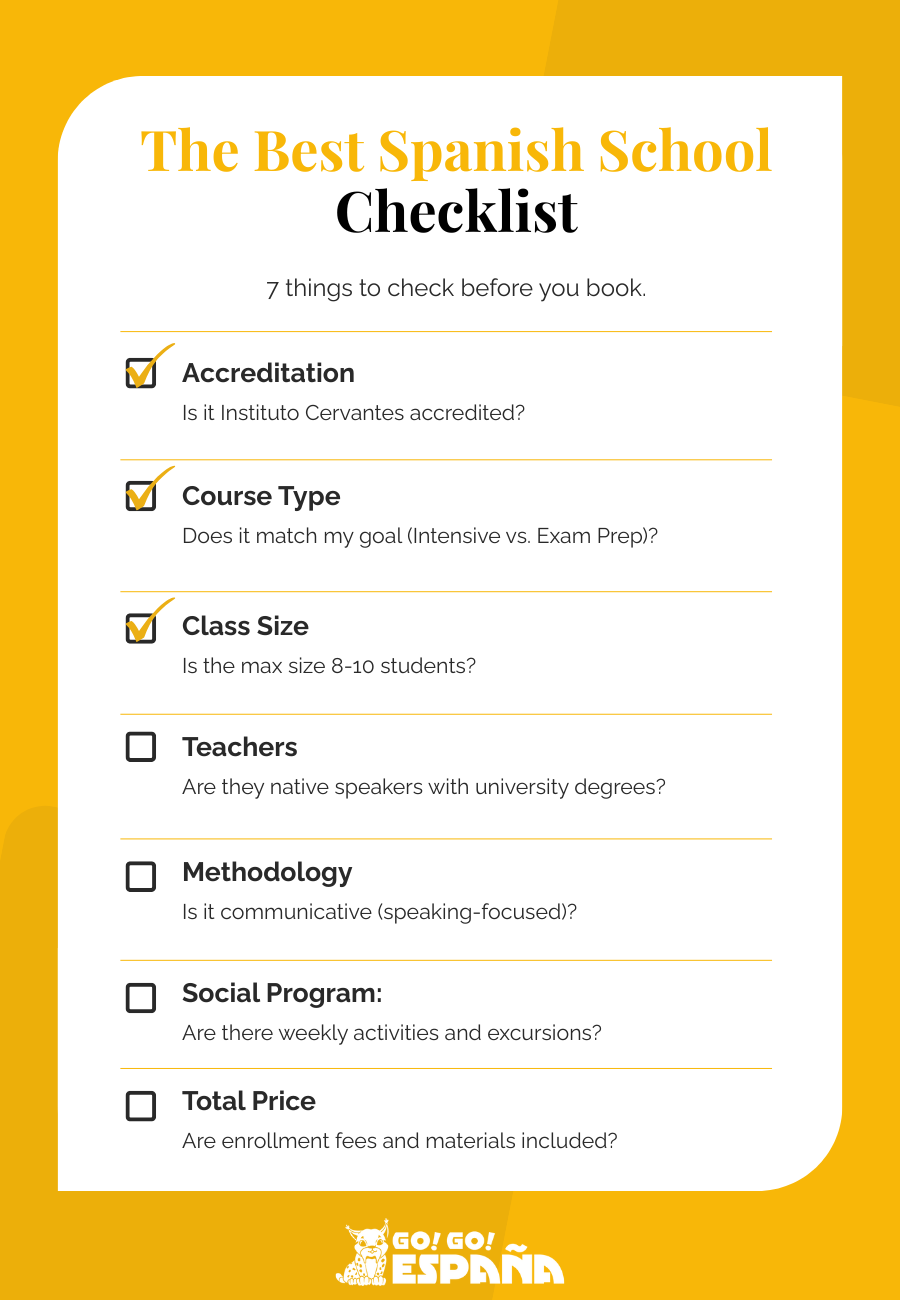
The Perfect School Checklist
With hundreds of schools to choose from, finding the right fit can be tricky. Use this simple guide to evaluate your options and ensure you choose a high-quality, accredited program that meets your goals.
What is the Most Important Factor to Look For from a Spanish Language School?
The single most important factor when selecting a Spanish language school in Spain is official accreditation from the Instituto Cervantes.
The Instituto Cervantes is a public institution established by the Spanish government to promote the Spanish language. It conducts thorough inspections to ensure schools meet high standards in academics, teacher qualifications, facilities, and student services.
Choosing an accredited language school is the best way to ensure you are investing in a professional, high-quality, and effective educational program. That’s why all of our partner schools at Go! Go! España are accredited by the Instituto Cervantes.

Which Type of Course Matches Your Goals?
The best Spanish language schools in Spain offer a wide range of courses. To find the right one, start by identifying your personal goals.
What do you hope to achieve during your studies in Spain? Your answer will guide you toward the program that best fits your needs.
- Intensive Courses (20+ hours per week): The most popular choice among Go! Go! España students, ideal for making fast progress in a short period of time. This option also meets the minimum study hours required to apply for a Spanish student visa.
- DELE/SIELE Exam Preparation: If your goal is to earn an official Spanish language certificate for your career or studies, a dedicated exam prep course is essential. Many schools offer these classes alongside their intensive programs. If your goal is to get an official certificate for work or university, it’s important to understand which test is right for you. Read our detailed comparison of DELE vs. SIELE before choosing your prep course.
- Long-Term Academic Year Courses: Perfect for students seeking a deep, six- to twelve-month immersion to reach advanced fluency. These courses often provide flexibility for breaks and travel throughout the year.
- Spanish + Activity Courses: Many schools combine language learning with cultural experiences such as cooking, flamenco, or surfing, offering a fun and well-rounded way to learn Spanish.
Part of understanding your goals is knowing your starting level. Take our free Spanish Level Test to discover your baseline. If you’re a true beginner, get started with our Free Online Beginner Course.
What Should You Ask About the Classroom Experience?
A great classroom experience depends on the teaching style, class size, and teacher quality.
Before enrolling, it’s important to ask a few key questions about what happens inside the classroom.
- Teaching Methodology: Does the school use a communicative approach, emphasizing speaking, or a more traditional grammar-focused method? Intensive courses typically cover all four language skills: listening, speaking, reading, and writing.
- Class Size: Smaller classes, ideally with 8-10 students, give you more personal attention and speaking time. The majority of Go! Go! España’s partner schools maintain small class sizes to ensure a positive learning experience.
- Teacher Qualifications: Are the teachers native Spanish speakers? Do they hold a university degree and have specialized training in teaching Spanish as a foreign language?

How Important is the School’s Social Program?
A school’s social and cultural activity program is essential for practicing Spanish in real-world situations and making new friends. Much of your language learning happens outside the classroom, so a school that offers engaging activities can greatly enhance your experience.
Look for schools that provide programs such as:
- Guided city tours to explore your host city while practicing Spanish.
- Tapas tours to enjoy local cuisine and cultural immersion.
- Museum visits for a mix of language practice and cultural education.
- Cooking classes to learn Spanish recipes and vocabulary in a hands-on way.
- Weekend excursions to nearby towns for immersive travel experiences.
- Language exchanges (intercambios) to practice speaking with locals in a conversational setting.
How Does Your Choice of City Affect Your Experience?
Your choice of city will greatly influence your daily experience and budget, and it will also determine which Spanish language schools in Spain are available to you.
Do you prefer the hustle and bustle of a major capital like Madrid or Barcelona, the relaxed vibe of a beach town such as Valencia, or the historic charm of a smaller city like Granada? Each option offers a unique experience, and your location will be one of the biggest factors in your total cost.
If you haven’t chosen a city yet, explore all your options in our guide on how to choose a city in Spain for your Spanish language study.
Should You Book Accommodation Through Your School?
Most language schools can help arrange accommodations, typically either a room with a local host family or a spot in a shared student residence.
This option is convenient and safe, but it often costs more than arranging housing on your own. You may also not receive details about your accommodation until a week before classes begin.
To avoid these issues, we recommend booking through Go! Go! España’s trusted housing platform. You can also explore all your options in our comprehensive guide to finding student accommodation in Spain.
How Can You Understand the Total Price of a Course?
When comparing schools, it’s important to look at the total cost, not just the weekly tuition fee.
When you receive a price quote, make sure you understand everything that’s included. Always ask about potential extra fees, such as:
- One-time enrollment or registration fees
- Cost of textbooks and learning materials
- Fees for official exams like the DELE
- Additional costs for optional activities or excursions
Many schools also offer discounts for longer-term courses, so you may pay a lower weekly rate if you stay for 12 weeks instead of just two.
For an easy way to compare the costs of different Spanish language schools, check out our Spanish Course Price Comparison Tool.
FAQ About Choosing the Best Language School in Spain
1. What is the average price for a language school in Spain?
Prices vary widely by city, school, and the total length of your course, but a typical one-week intensive course (20 hours) can range from around €150 to €240. Many schools offer discounts for booking longer-term courses.
2. Are all language schools in Spain accredited by the Instituto Cervantes?
No, not all schools are accredited. While many excellent schools hold accreditation, it is a voluntary process. Choosing an accredited school is the safest way to guarantee quality. That’s why all Go! Go! España partner schools are accredited.
Note: Your language course must be through a school accredited by the Instituto Cervantes or an accredited university to qualify for a student visa.
3. Do language schools help with the visa process?
Yes. To apply for a student visa, you will need an official acceptance letter from your chosen school. Accredited schools are experienced in providing the correct documentation for visa applications. Go! Go! España is also well-equipped to support you throughout this process.
4. What is a “homestay”?
A homestay is an accommodation option where you live with a local Spanish family. It’s a fantastic way to immerse yourself in the language and culture, and meals are often included.
5. Can I visit a school before I enrol?
Absolutely. If you are already in Spain, most schools welcome visits to meet staff and observe a class before making your final decision. If you are planning a vacation in Spain, you can also organize tours to see which school is the best fit before your studies begin.
Our team at Go! Go! España often organizes visits to different schools on behalf of students, as we have strong connections with top schools across the country. Reach out and we can get started!
Ready to Find Your Spanish Language School?
Choosing the right language school is more than just a decision. It’s the first step toward an exciting, life-changing adventure.
The best Spanish language school is the one that matches your personal goals, fits your budget, and complements your unique learning style, setting you up for an immersive and unforgettable experience.
Ready to find your perfect fit? Go! Go! España partners with top accredited language schools across Spain.


